
Rubber materials
Ten material families, 140 references — every one of them cut to your drawing. Choose a family to see its references and their characteristics.
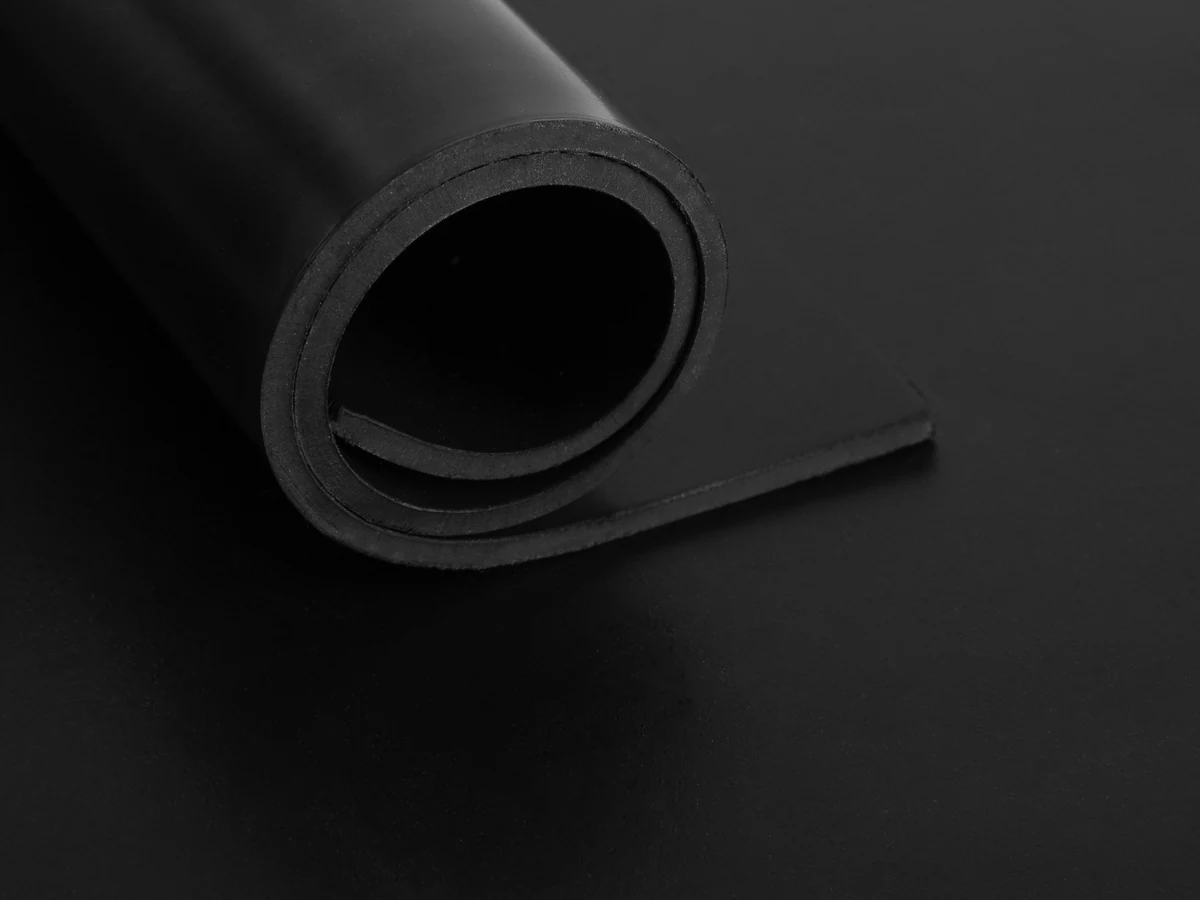
SBR
Economical general-purpose rubber with good abrasion resistance.
See the range →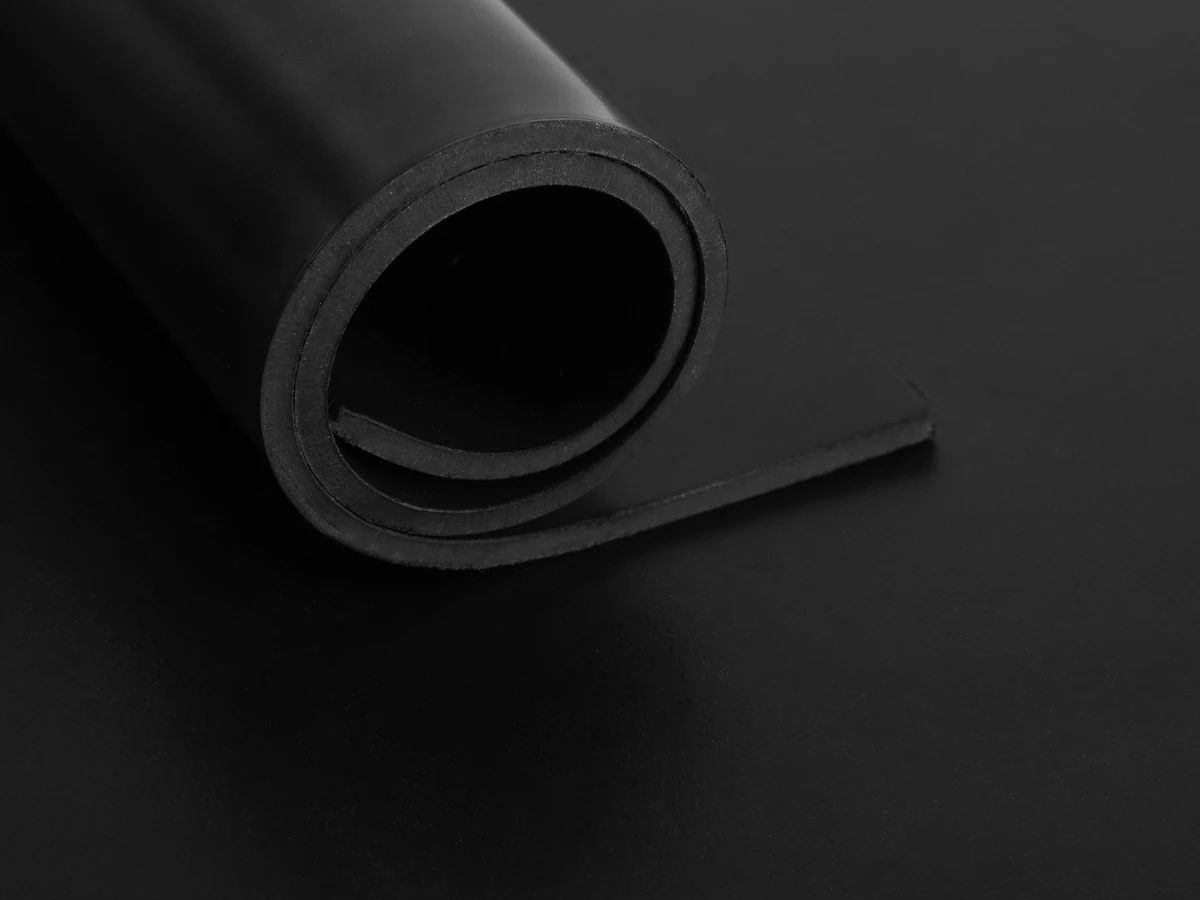
Nitrile (NBR)
Resistant to mineral oils, greases and fuels.
See the range →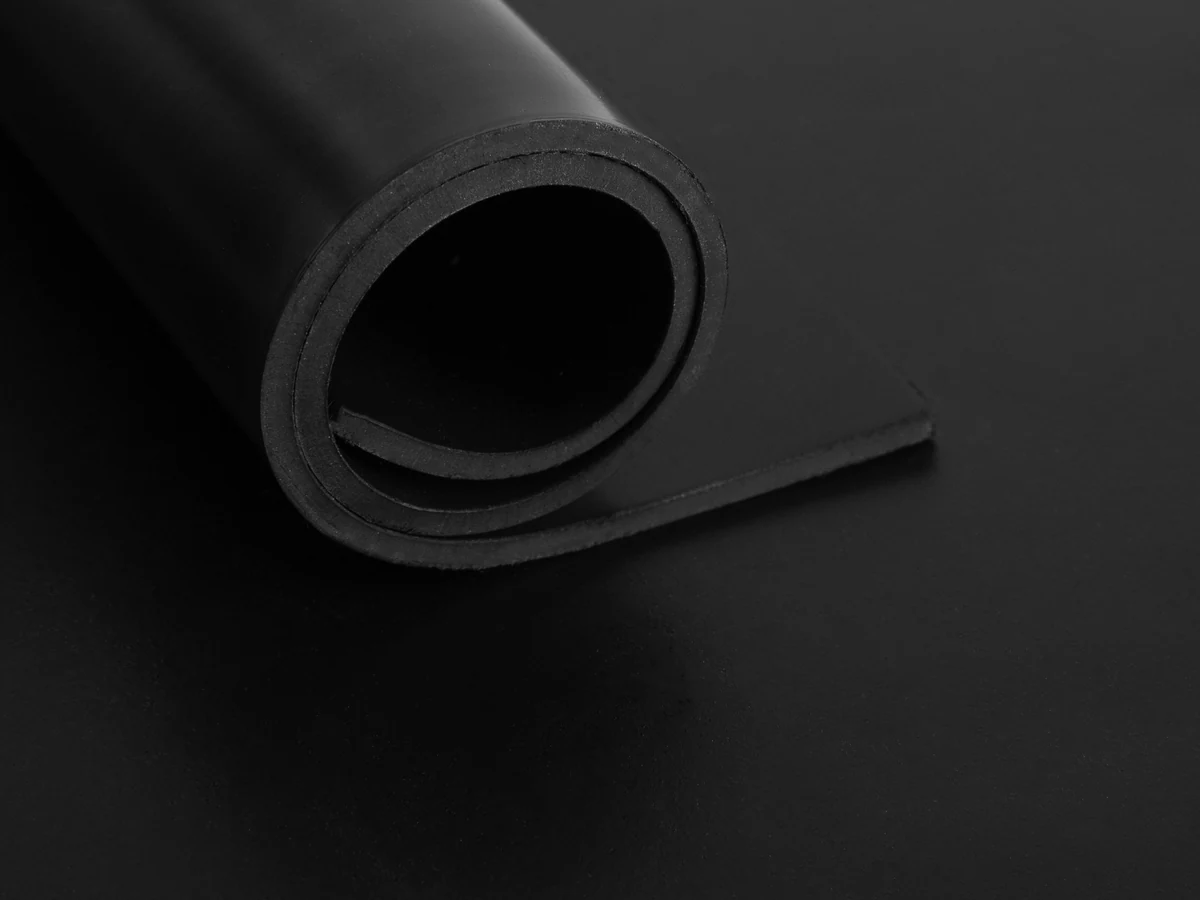
EPDM
Weather, ozone and hot-water resistant — the outdoor standard.
See the range →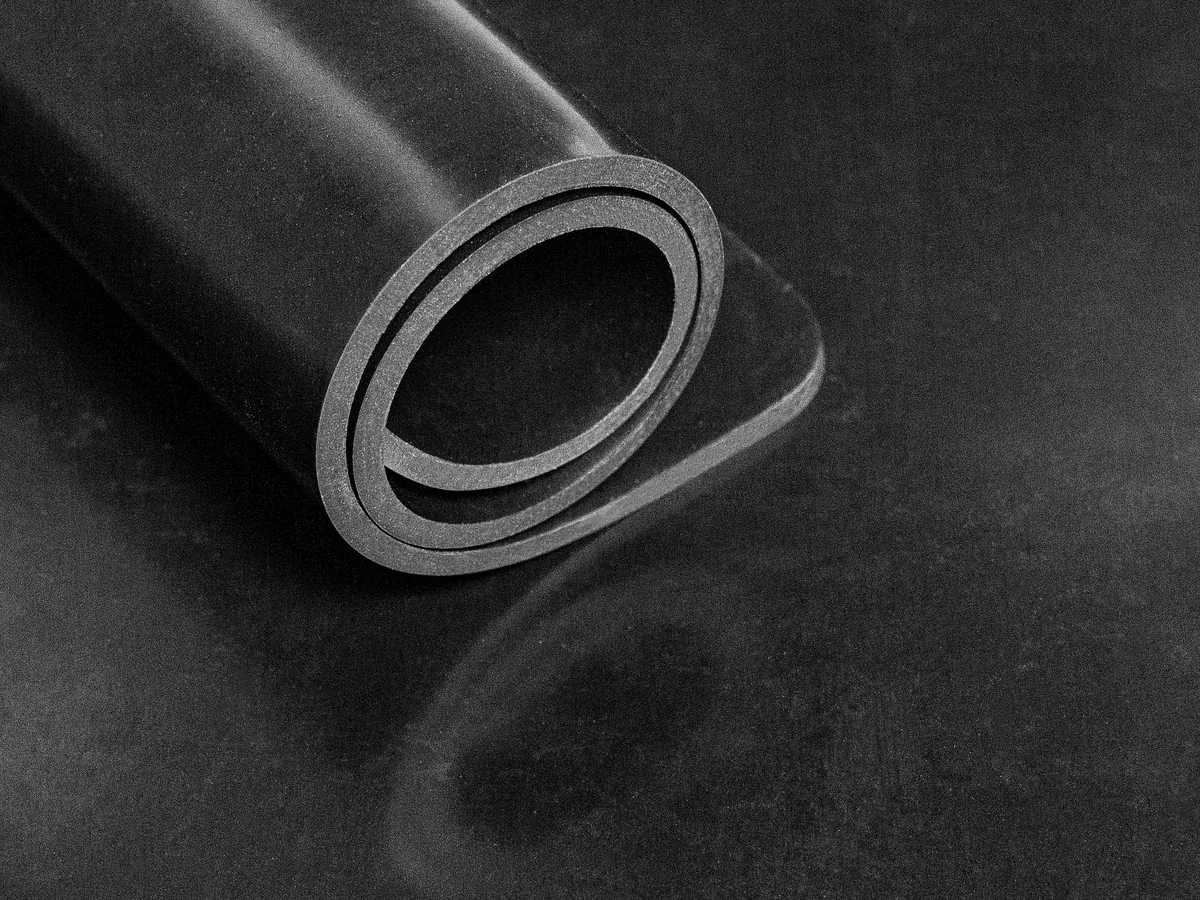
Neoprene (CR)
Versatile all-rounder: weather, moderate oils, flame retardance.
See the range →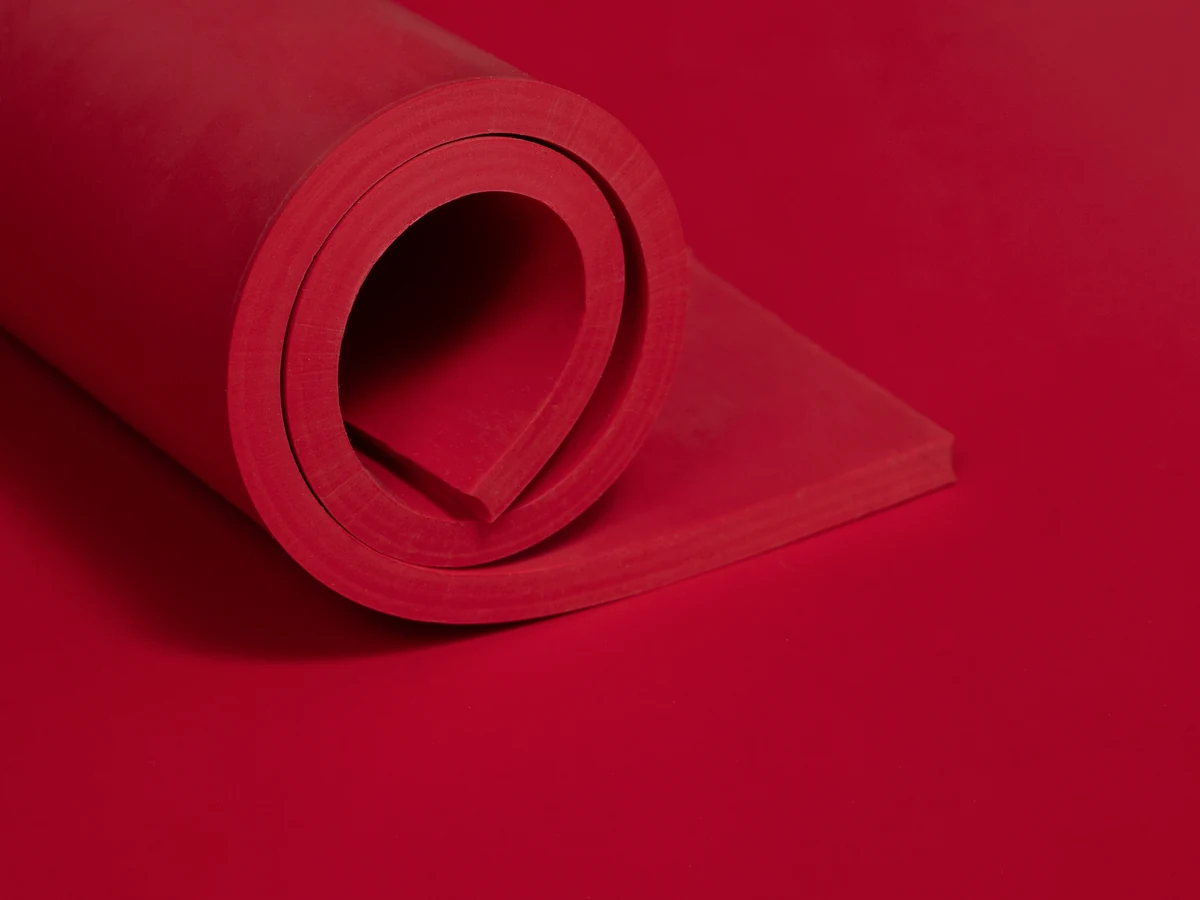
Natural rubber (NR)
High elasticity and outstanding abrasion resistance.
See the range →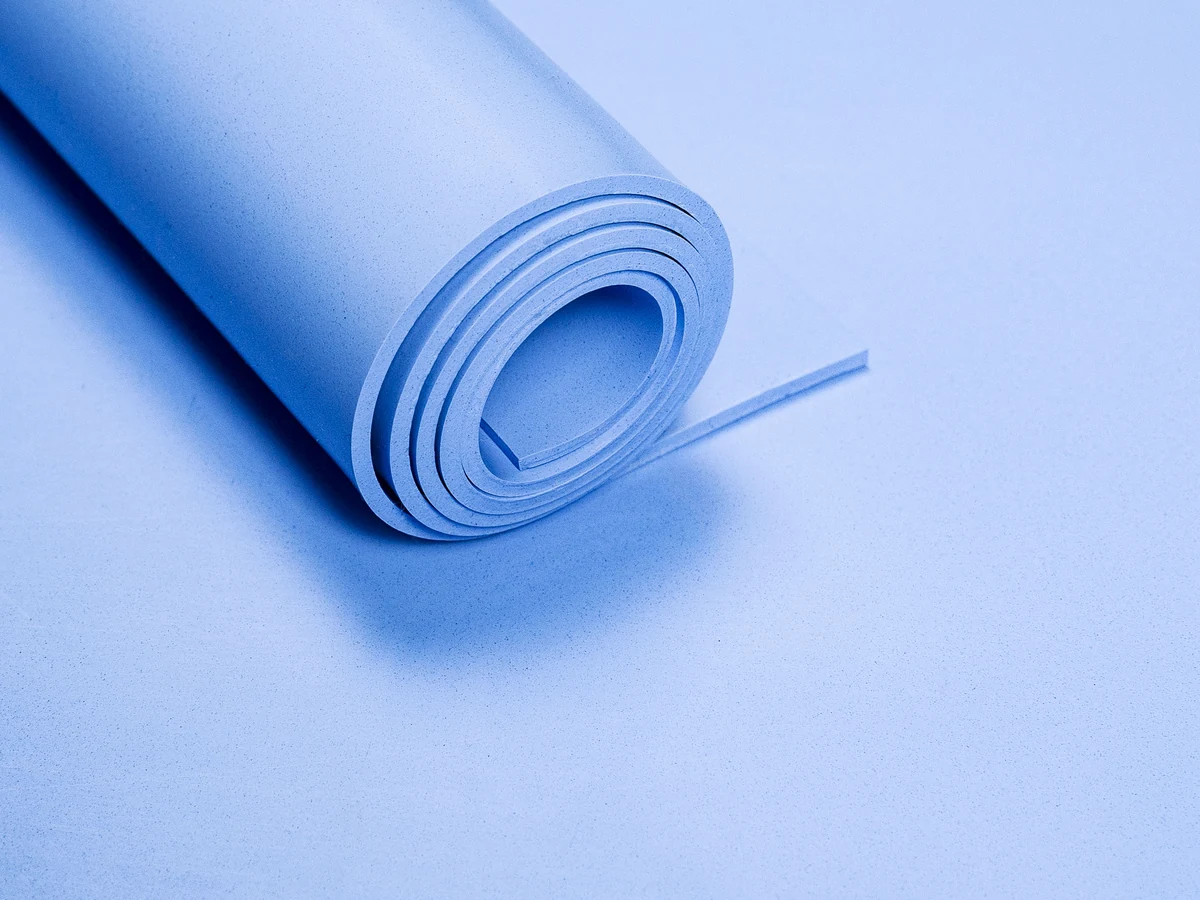
Food grade
Certified compounds for direct contact with food.
See the range →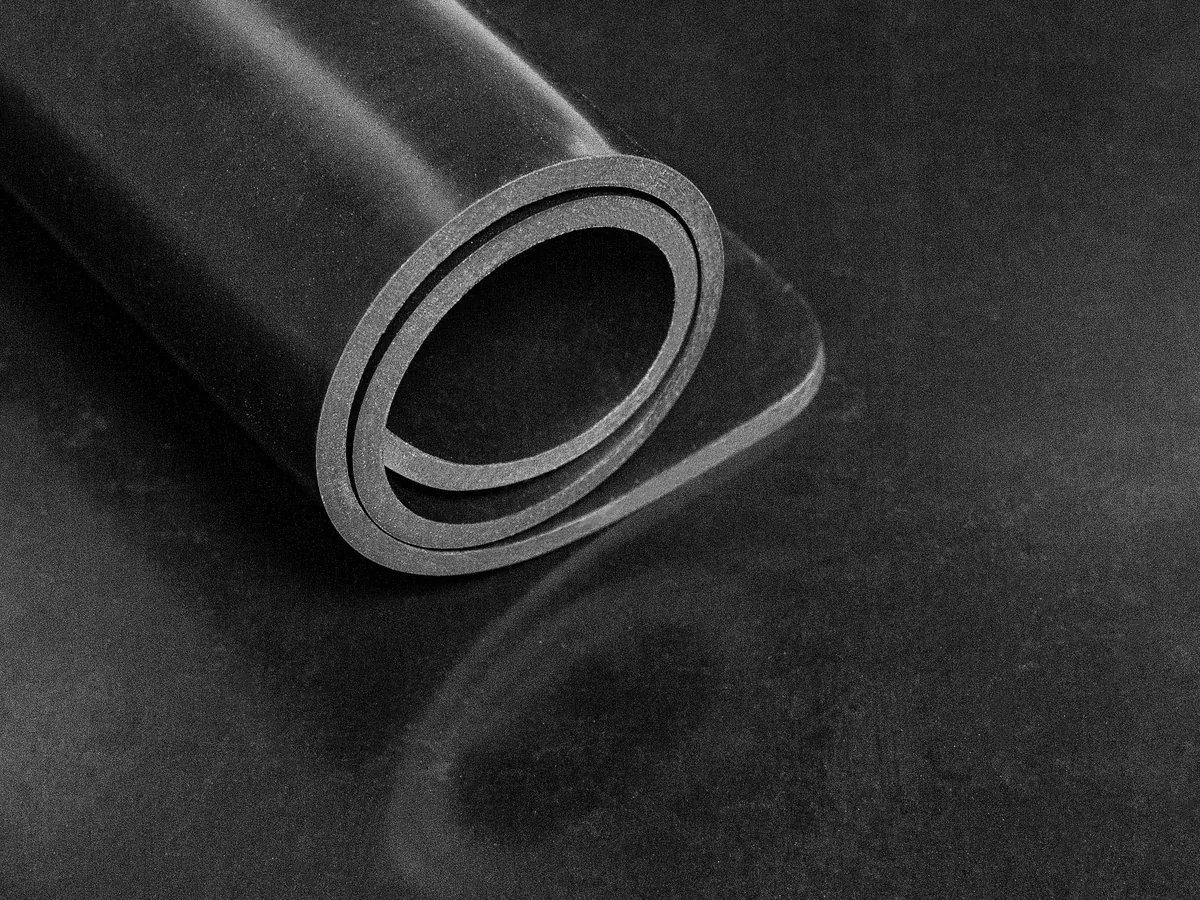
FKM
Extreme chemical and high-temperature resistance.
See the range →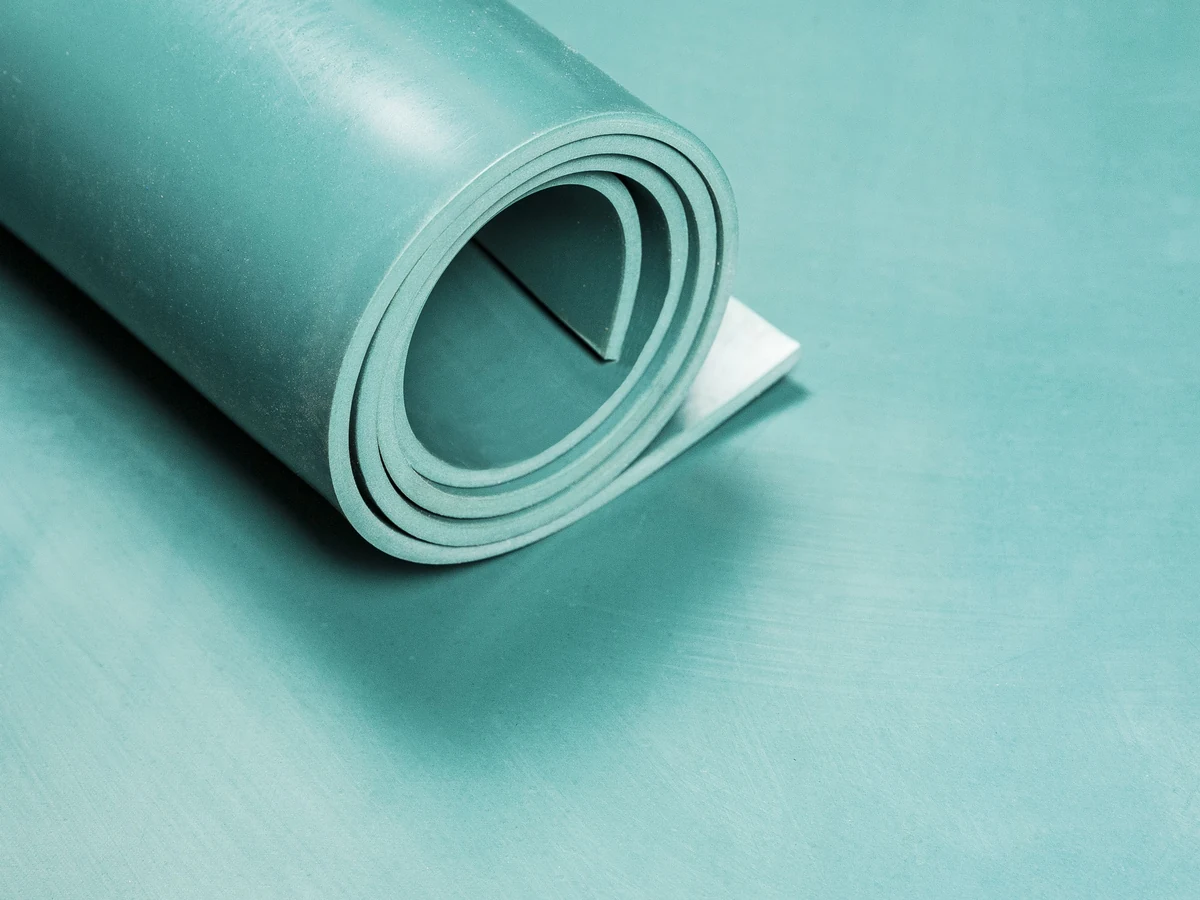
Specialty
Compounds with specific properties.
See the range →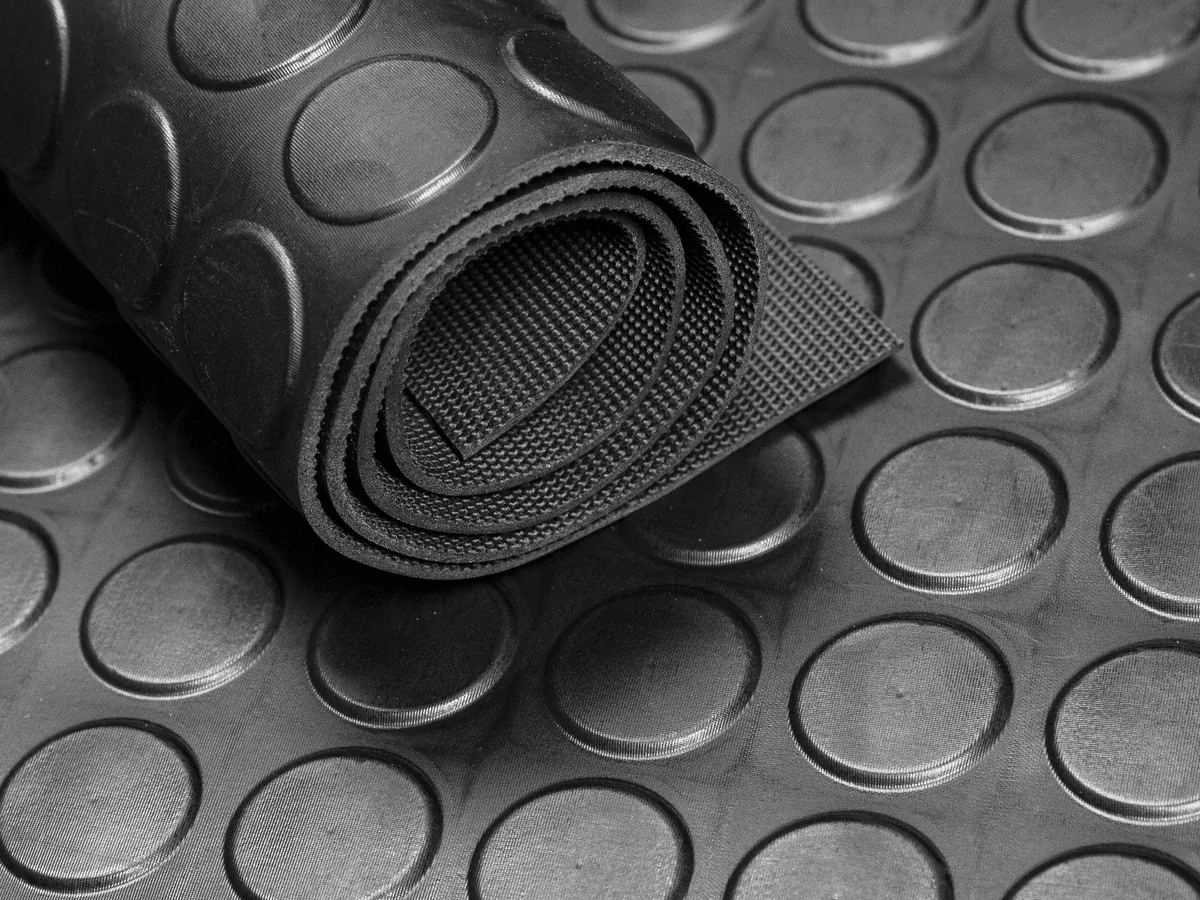
Matting
Floor coverings, anti-slip and electrical insulating mats.
See the range →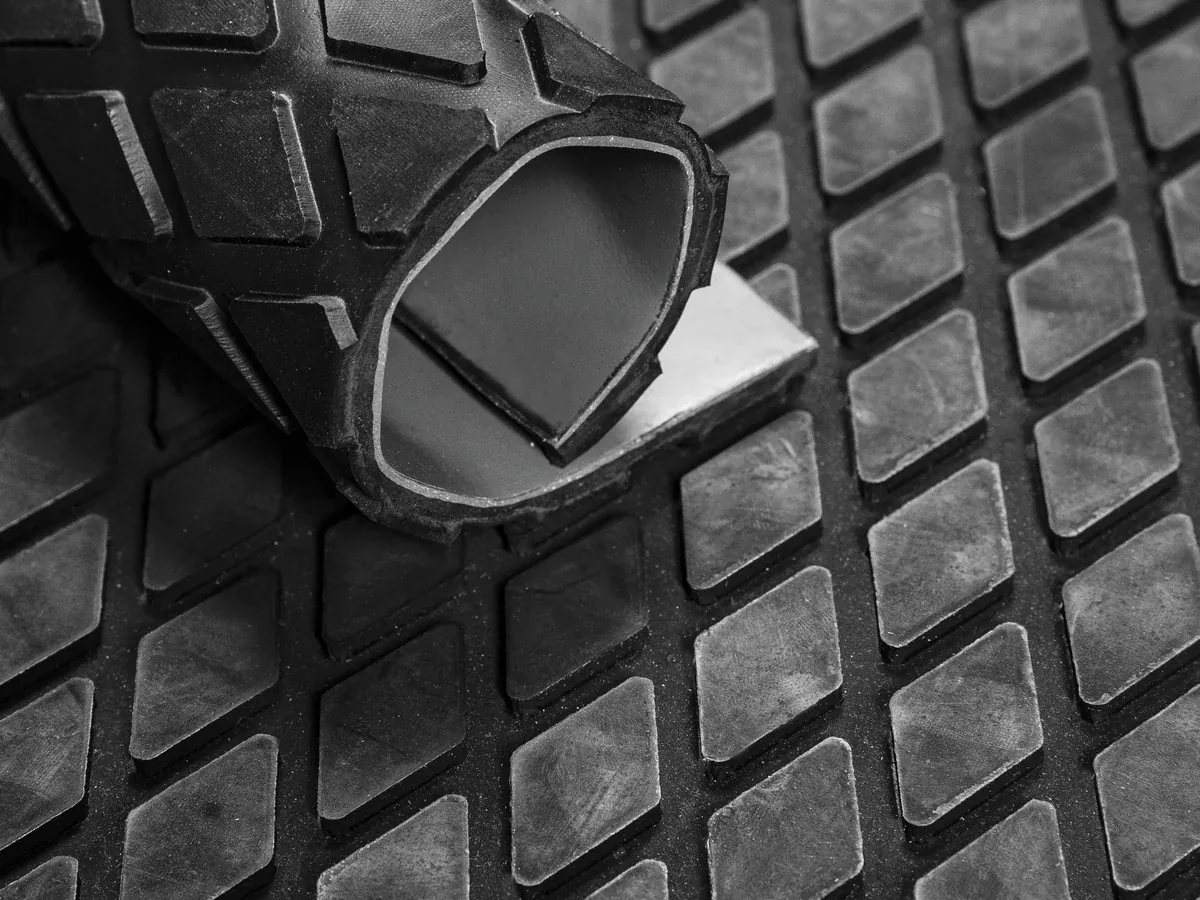
Wear-resistant
Abrasion and impact protection for handling equipment.
See the range →Availability may vary — ask us for a specific need.
How to read our references
Every reference says what the material is: type, hardness, colour and options. Two references that look alike always differ in at least one of these parts.
- NR
- material or kind of product (NR = natural rubber, EPDM, NBR, SIL = silicone, MAT = matting, LAG = pulley lagging…)
- 45
- hardness in Shore A
- RD
- colour (BK black, RD red, YE yellow, OG orange, BU blue, WH white, GY grey…)
- BL
- options: BL bonding layer for cold bonding, FB fabric-reinforced, E economy, P premium, FG food grade…
BL (bonding layer): the back of the sheet carries a bonding layer, ready to be glued cold to steel or rubber — the usual choice for linings, chutes and pulley lagging. Without BL, the sheet is used loose, bolted or glued with a primer.
Not sure which rubber to choose?
Tell us the application (temperature, fluids, contact, environment) and we will recommend a material.